By: Dr. Anatole Mayema
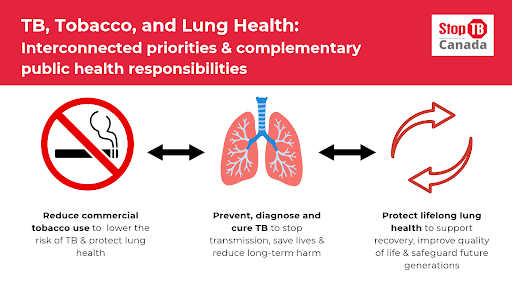
Figure 1. TB, tobacco and lung health: complementary priorities for a healthier Canada
A person can complete tuberculosis treatment, be declared cured, and still struggle to breathe.
This reality challenges how we define success in tuberculosis (TB) care. While early diagnosis, effective treatment and prevention remain essential, microbiological cure does not always mean restored lung function or full recovery.
Drawing on my experience in TB clinical care and national programme leadership, I believe we must ask a broader question: Are we doing enough to protect the long-term health of people affected by TB?
The connection between smoking and TB
Smoking approximately doubles the risk of developing TB disease and is associated with poorer treatment outcomes. The World Health Organization estimates that smoking contributed to approximately 700,000 new TB cases globally in 2024.
These figures highlight an important opportunity: addressing tobacco use can help prevent TB and improve outcomes for people already affected by the disease.
Canada already has relevant clinical guidance. The Canadian Tuberculosis Standards recommend offering tobacco-cessation support during TB treatment. The challenge is making sure this support is consistently available to everyone who needs it.
In practice, this means asking people about tobacco use without judgment, offering help to quit and connecting them with appropriate services. TB clinics, family doctors, primary care providers and tobacco-cessation programmes can work together to make support easier to access.
Recovery does not end with TB treatment
For some people, completing TB treatment is only the beginning of a longer recovery.
TB can leave lasting damage to the lungs, even after the infection has been successfully treated. Some people continue to experience breathlessness, reduced lung function or chronic respiratory conditions after completing TB treatment.
This is why follow-up care matters. The Canadian Tuberculosis Standards conditionally recommend pulmonary function testing at treatment completion, or within six months, for people treated for pulmonary TB.
The Canadian FOLLOW-TB study is examining longer-term lung health, functioning and livelihoods among people affected by TB. This work matters because recovery is not only about test results; it is also about whether people can breathe comfortably, return to daily activities and participate fully in their communities.
An important question remains: Who takes responsibility for respiratory health once TB treatment ends?
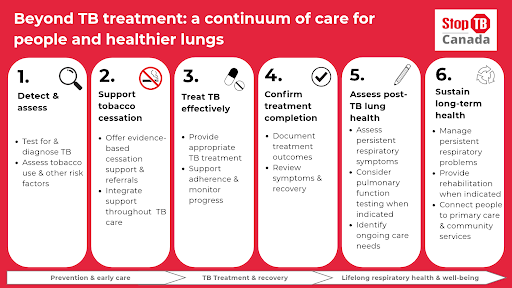
Figure 2. Beyond TB treatment: an illustrative continuum connecting tobacco-cessation support, TB care, post-TB respiratory assessment and ongoing care. Illustration informed by the Canadian Tuberculosis Standards.
From recommendations to measurable action
As Canada advances its TB elimination agenda, three practical priorities deserve attention:
1. Integrate tobacco cessation into routine TB care. Assess commercial-tobacco use, offer evidence-based support and strengthen referral pathways.
2. Strengthen post-TB respiratory care. Facilitate access to lung-function assessment, clinical follow-up and rehabilitation when indicated.
3. Measure implementation. Track whether cessation support is offered, referrals are completed and post-TB respiratory needs are identified and addressed.
These efforts must be paired with action on wider determinants of health, including inequities in housing, food security and healthcare access. Services should be culturally safe, community-informed and Indigenous-led where Indigenous communities are concerned, while respecting traditional and ceremonial tobacco practices.
Bringing a shared agenda for lung health to Parliament Hill
During the National Lung Health Alliance’s October 2026 Hill Day activities, Stop TB Canada joined lung-health advocates in advancing discussions about tobacco prevention, smoking and vaping, and the importance of protecting respiratory health.
Meetings with MP Richard Bragdon and Senator Victor Boudreau provided opportunities to discuss the role of research evidence and public policy in advancing a smoke-free generation in Canada. These discussions also underscore the importance of connecting prevention with the needs of people already affected by TB and other respiratory conditions.
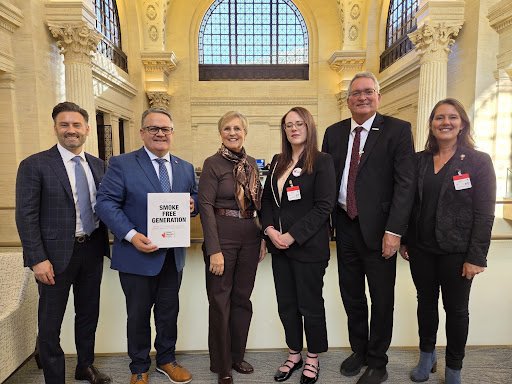
Figure 3. National Lung Health Alliance representatives meeting with Senator Victor Boudreau during October 2026 Hill Day activities.

Figure 4. National Lung Health Alliance representatives meeting with MP Richard Bragdon (right) during October 2026 Hill Day activities.
Preventing tobacco use is critical not only to reducing tobacco-related disease, but also to protecting lung health holistically. Stop TB Canada calls on the federal government to advance this agenda and strengthen policies that protect future generations from tobacco-related harm. International developments offer useful examples of how governments can advance this goal. In the United Kingdom, the Tobacco and Vapes Act received Royal Assent in April 2026, establishing a framework to prohibit tobacco sales to people born on or after 1 January 2009. While Canada’s legislative context differs, this approach illustrates how long-term tobacco prevention policies can help protect future generations and support better lung health.
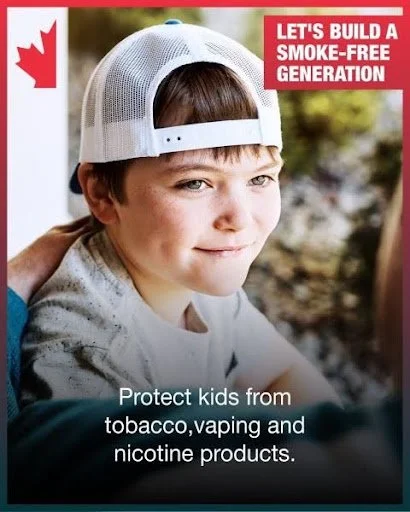
Figure 5. National Lung Health Alliance Smoke-Free Generation campaign. Source: National Lung Health Alliance.
How you can help protect lung health
As Canada advances TB elimination, there is an opportunity to connect tobacco prevention, better TB care and long-term respiratory health. Whether you work in healthcare, research, public health or community services—or have been personally affected by TB—there are ways to contribute:
1. Join the effort. Researchers, healthcare professionals, lung-health organizations, tobacco-control advocates and community partners across Canada are invited to connect with Stop TB Canada and strengthen collaborative action.
2. Support a Smoke-Free Generation. Add your voice to the National Lung Health Alliance campaign to protect future generations from tobacco-related harm.
3. Share your experience of TB and smoking. People affected by TB can contribute their perspectives to a survey exploring TB, smoking and tobacco-related experiences. This is an external survey shared by advocates, not a Stop TB Canada survey.
4. Advance innovative lung-health research. Researchers and eligible academic teams can explore the Lung Health Foundation’s Hope Innovation Research Grant. Proposals must meet the funder’s specific priorities; TB-only projects are not automatically eligible.
Curing TB saves lives. Protecting lung health during and after treatment helps people reclaim their lives. Together, we can advance TB elimination and build a healthier, smoke-free future.